Winter servicing is the part that actually keeps a unit working in Philadelphia. Plain-water tanks and standard blue deodorizer freeze solid once temperatures sit below 32°F for a full night, which locks the pump line…
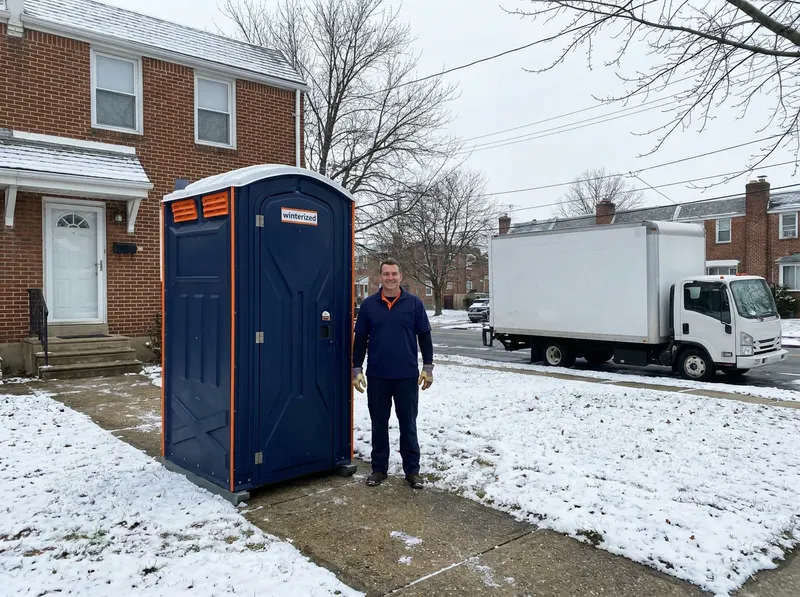
Winter servicing is the part that actually keeps a unit working in Philadelphia. Plain-water tanks and standard blue deodorizer freeze solid once temperatures sit below 32°F for a full night, which locks the pump line and cracks the flush mechanism. Fairmount Portable Toilet Rental charges winterized tanks with a glycol-based non-toxic antifreeze deodorizer, and each weekly service visit swaps that charge so the liquid never turns to ice on a Kensington rowhome renovation or a Roxborough winter build.
Decision-fit comes down to how long the unit sits out. A standard unit works fine from April through October; a winterized unit is the one to order for any job running from late November through March. For a heated indoor garage or a short one-week December cleanup in Fairmount, a standard unit with an antifreeze charge usually holds. For a months-long site through the deep cold, a foundation pour in Point Breeze, a roof job in Manayunk, or a bridge project along the Schuylkill River Trail, an insulated cold-weather model is the safer choice because its molded double-wall panels slow the tank from freezing between the weekly visits. The trade-off is straightforward: the insulated unit costs more per month, while the standard-plus-antifreeze setup saves money but relies on tighter service timing during a hard freeze.
Placement matters more in winter. Snow and salt-truck routes narrow Philadelphia's smaller streets, the tight blocks of Passyunk Square, Fishtown, and Northern Liberties leave little room, so a unit set on a plowed pad or fenced staging area stays reachable for the service truck. A common misunderstanding: a winterized rental is not a heated toilet. The antifreeze and insulation prevent the tank from freezing; they do not warm the seat. Units placed on a slope or against a north-facing wall in Germantown that never catches sun freeze faster, so servicing may shift to twice weekly during a sustained cold snap.
Here is how a winter order runs: 1) confirm the placement spot and the rental start date; 2) the unit arrives charged with antifreeze, typically within 24, 48 hours; 3) the tank is pumped and re-charged on each weekly visit; 4) at pickup the tank is emptied and the unit removed. Rentals across South Philadelphia and the wider county follow the same schedule regardless of neighborhood.
Every job gets a firm, written price after a free on-site visit.
Tell us about your winterized portable toilet rental job in Philadelphia and we'll send a clear, written quote, usually the same day.
 Fairmount Portable Toilet Rental