OSHA standard 29 CFR 1926.51 sets the baseline for a Philadelphia job site: one toilet per 20 workers when a sewer connection is not available. A framing crew of 15 in Fishtown is covered by a single standard unit; a…
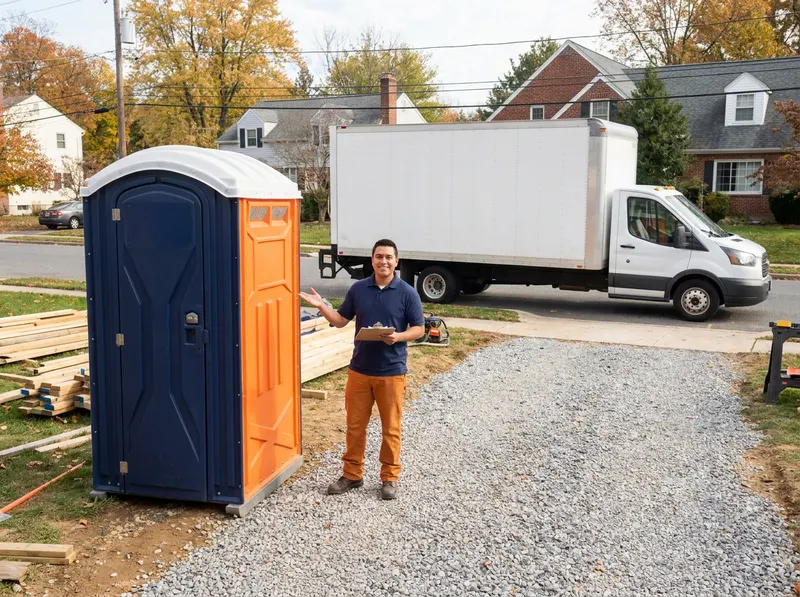
OSHA standard 29 CFR 1926.51 sets the baseline for a Philadelphia job site: one toilet per 20 workers when a sewer connection is not available. A framing crew of 15 in Fishtown is covered by a single standard unit; a 45-person concrete pour in the Navy Yard area of South Philadelphia needs three. For crews without running water, adding a standalone handwash station with a 22-gallon fresh-water tank meets the washing requirement that many general contractors write into their site plans.
Decision-fit comes down to duration and access. A short interior renovation in Manayunk or Roxborough that runs four to six weeks fits a single standard unit on a standard monthly cycle. A long ground-up build in Kensington or Northern Liberties running six months or more usually benefits from a deluxe flushing unit or a unit paired with the handwash station, because the trade-off is a higher weekly line item versus fewer complaints from a large crew. Tight rowhouse streets in Point Breeze, Passyunk Square, and parts of Germantown limit truck access, so the unit is placed at the curb or in a driveway rather than deep in a lot; confirming a spot the service truck can reach within about 15 feet keeps weekly pump-outs on schedule.
Placement on a Philadelphia site follows four steps: (1) the site manager gives the address, crew count, and lot access details; (2) a standard unit is delivered on a lift-gate truck and set on level ground within reach of the service route; (3) a servicing tech returns weekly to pump the tank, sanitize the interior, and restock paper and sanitizer; and (4) the unit is removed at the end of the rental with a final pump-out. Placement on a public sidewalk or a street parking lane in neighborhoods like Fairmount requires a right-of-way permit from the City of Philadelphia; a unit set entirely inside the fenced lot does not.
A construction toilet rental is a monthly service contract, not a one-day event drop. The quoted monthly rate covers one weekly service visit; a crew that fills a 60-gallon tank faster than seven days needs an added visit, billed separately, so heavy-use sites are quoted for twice-weekly service upfront to avoid an overflow between cleanings. Winter placement holds up on frozen Philadelphia sites because the waste tanks use a non-freezing deodorizer charge, though blue liquid can gel below about 20°F and is topped up at each visit.
Every job gets a firm, written price after a free on-site visit.
Tell us about your construction site toilet rental job in Philadelphia and we'll send a clear, written quote, usually the same day.
 Fairmount Portable Toilet Rental